









Varios and GPS: How to Choose the Right Instrument for Your Flying Style?
In paragliding, instruments are not there to fly for you, but to extend your senses. Whether you are a beginner, a Hike & Fly enthusiast, or a competitive pilot, the choice between a simple "audio-only" vario and a complex flight computer radically changes your mental workload management in the air.
1. The Audio Vario (The "Bip-Bip"): Pure Instinct
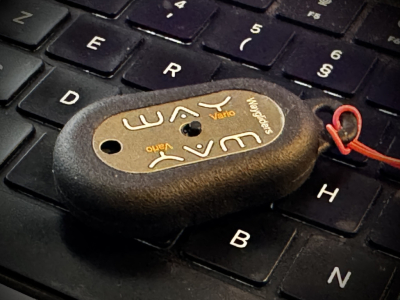
This is the minimalist tool par excellence. It uses a high-precision pressure sensor (MEMS) to translate atmospheric pressure changes into audio signals. The faster you climb, the faster the beeps.
- Why use it: To keep your visual field clear. It is the ideal tool for beginners who need to keep their eyes on their wing and surroundings, or for ultra-light Hike & Fly fans.
- Technical Insight: A high-quality vario should have an adjustable "integration time" to avoid beeping during pitch oscillations while remaining responsive enough to signal the entrance of a thermal.
2. The Combined Vario-GPS: The Swiss Army Knife
This is the current industry standard. In addition to pressure sensors, the device includes a GPS chip. This allows for the calculation of Ground Speed, a vital data point for understanding wind influence.
- Solar Varios: Devices like Syride or LeBipBip are self-charging. No more battery anxiety at the take-off!
- Drift Analysis: GPS allows you to visualize your track. If you are circling in a thermal and your track looks like a stretched spiral, you can instantly visualize the wind's strength and direction.
3. Flight Computers and Competition Tablets
Here, we enter the realm of pure performance. These devices offer large screens (often E-ink for perfect sunlight readability) and manage complex airspaces.
Glide Ratio Calculation (L/D Ground)
This is the crucial function for cross-country flying. The device calculates in real-time whether, given your current altitude and headwind, you can clear the next ridge or reach the landing zone. It is your mathematical safety net.
Summary: Which tool for which pilot?
- Beginner / Local Flights: A simple audio vario or a small solar combo (e.g., Sys'One or BipBip).
- XC Pilot: A Vario-GPS with airspace mapping (e.g., Syride Sys'Nav XL or Naviter Oudie).
- Hike & Fly: Weight saving is the priority. A small, lightweight solar GPS mounted on the riser is perfect.
Bons vols, Cyrille MARCK - Rid'Air